Why Patients Look for Expertise — and What to Look for in a Plastic Surgeon in Kota
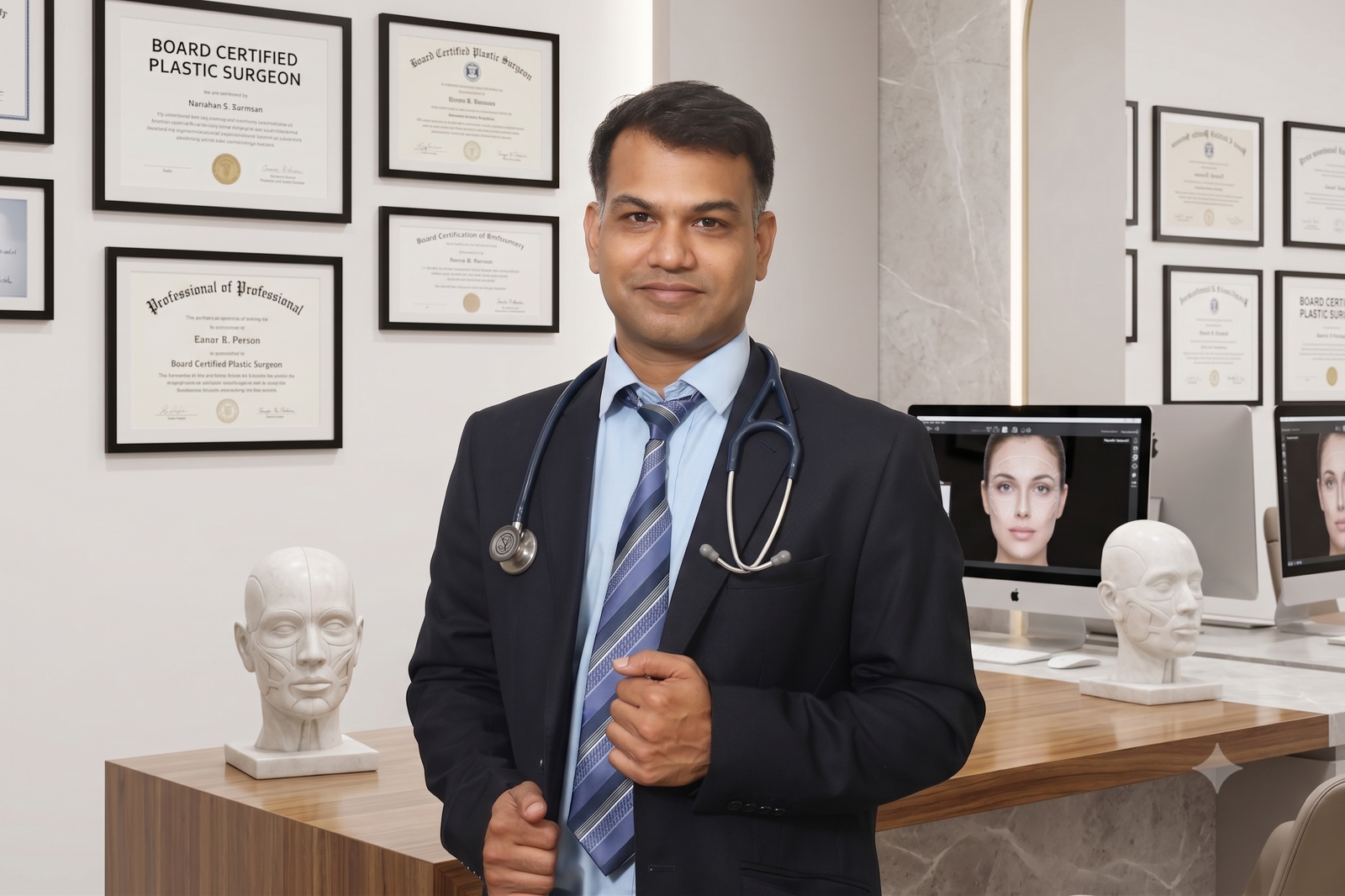
Choosing a plastic surgeon involves more than searching for a “best” name. It means understanding qualifications, experience, surgical judgement, communication, safety, and whether your individual situation is a good fit. Dr. Piyush Malav holds MCh Plastic Surgery with 15+ years of experience in reconstructive and cosmetic surgery.
Google par “best plastic surgeon in Kota” search karna easy hai. Lekin asli sawaal thoda alag hai — mere case ke liye kaunsa surgeon appropriate hai?
What Does “Best Plastic Surgeon” Actually Mean?
Search-engine language and medical meaning are not always the same thing. “Best” implies a ranking, one name at the top, everyone else below it. But surgical suitability doesn’t work like that. It depends on qualification, specialty, experience with cases like yours, how clearly options are explained, how risks are discussed, and, just as much, on your own anatomy, goals, and health.
Doctor choose karna important hai. Lekin apni situation ko samajhna usse bhi zyada important hai.
The best surgeon for one patient may not be the right surgeon for another, not because one is more skilled, but because suitability is individual. This page exists to help you understand what to actually look for, using Dr. Piyush Malav’s verified credentials and approach as a working example.
Expertise is not one number. It is the combination of training, experience, judgement, and responsible patient care.
The Authority Triangle
Click each corner to explore what actually builds trust in a surgeon.
Credentials
Experience
Patient-Centred Care
Credentials Matter. But What Do They Actually Tell You?
MCh Plastic Surgery means specialist surgical training beyond a general medical degree, focused specifically on plastic, reconstructive, and cosmetic surgery. It tells you a surgeon has completed recognised specialist training. It does not, by itself, tell you how any individual case will be assessed or managed, that still requires a consultation.
Reading a Surgeon’s Credentials
15+ Years: What Experience Can — and Cannot — Tell You
It would be easy to simply say “15+ years = better.” That’s not quite accurate, and it isn’t the whole story. Experience develops pattern recognition, a surgeon who has managed many cases over years builds an instinct for what’s typical and what needs closer attention. But different cases carry different complexity. Reconstructive surgery requires careful planning around tissue and healing capacity. Cosmetic surgery requires proportional, individualised thinking. Anatomy varies. Healing varies. Complications can occur regardless of experience.
15 saal ka experience matlab yeh nahi ki har case same tareeke se handle hoga. Har patient ka anatomy alag hai, healing alag hai — isliye assessment hamesha individual hota hai, generic nahi.
From Years to Judgement
Principles Behind the Practice
These describe the principles this page is designed to communicate about responsible plastic surgery decision-making.
Precision
Small details can influence surgical planning.
Proportion
Aesthetic outcomes depend on relationships between structures, not isolated measurements.
Function
Appearance cannot be separated from movement, sensation, and function where relevant.
Safety
Risk assessment must precede any intervention.
Communication
Patients deserve understandable explanations, not jargon.
Realistic Expectations
Good care includes knowing what surgery cannot promise.
Individualisation
There is no universal surgical template.
Precision Before Intervention
How a Plastic Surgeon Thinks
What is the actual problem?
Which tissues are involved?
What is the patient’s goal?
What is medically realistic?
What alternatives exist?
What are the risks?
What will recovery involve?
Is surgery even necessary?
The Surgeon’s Map
Every operation begins with understanding the person — not just the procedure.
Every Surgical Decision Should Answer Four Questions
Why?
What problem are we trying to solve?
What?
What treatment options exist?
Risk?
What could go wrong?
What Next?
What will recovery and follow-up involve?
What If Not?
What happens if I decide not to have surgery?
A Quick Comparison
| Reconstructive | Cosmetic | |
|---|---|---|
| Primary goal | Restore form/function | Alter/refine appearance |
| Typical context | Injury, disease, congenital difference | Elective appearance-related concerns |
| Functional considerations | Central to planning | Considered where relevant |
| Planning | Anatomy + function + tissue | Anatomy + aesthetics + goals |
| Expectations | Restoration/improvement | Improvement/refinement |
| Risks | Procedure-specific | Procedure-specific |
| Recovery | Often staged | Procedure-dependent |
| Follow-up | Frequently multi-visit | Individualised |
Good Surgery Includes a Conversation About What Can Go Wrong
Bleeding
Infection
Wound-healing problems
Scarring
Asymmetry
Swelling
Sensation changes
Anaesthesia-related risks
Risk depends on the individual, the operation, medical history, and other factors, this page does not quote a numerical complication rate that isn’t specifically sourced and relevant to your situation.
Koi bhi surgery 100% risk-free nahi hoti — yeh baat chhupane wali nahi, samajhne wali hai. Achha surgeon woh hai jo yeh saaf-saaf bataye.
Five Common Mismatches
Expectation
“One procedure will create a perfect result.”
Reality
Surgical outcomes vary from person to person.
Expectation
“No scar.”
Reality
Surgery generally creates some form of scar, though visibility varies.
Expectation
“Recovery is quick for everyone.”
Reality
Recovery differs by procedure and by individual.
Expectation
“Experienced surgeon = no complications.”
Reality
Experience supports judgement, but no surgery is risk-free.
A 10-Point Checklist
Appropriate qualification
Relevant specialty
Meaningful experience
Transparent communication
Individual assessment
Clear explanation of risks
Realistic expectations
Respect for alternatives
Appropriate follow-up
Willingness to say “surgery may not be necessary”
A Good Surgeon May Sometimes Say No
A surgeon’s authority should not be measured by how many procedures they can offer. It should also include the judgement to recommend against intervention that isn’t appropriate. Not every problem needs surgery.
Kabhi-kabhi sabse achha surgical decision yeh hota hai ki abhi surgery na ki jaaye. Ismein koi sharm ya kami nahi hai — yeh clinical maturity hai.
Before You Choose, Ask These Questions
Qualification
“What is your specialist qualification?”
Experience
“How frequently do you manage cases like mine?”
Suitability
“Am I actually a suitable candidate?”
Alternatives
“What happens if I don’t have surgery?”
Risk
“What are the important risks in my situation?”
Recovery
“What should I expect during recovery?”
Follow-Up
“How will follow-up be handled?”
Expectations
“What result is realistically achievable?”
Seeking a Second Opinion Is Not Disloyal. It Is Informed Medicine.
Complex decisions may justify another opinion.
Second opinions can clarify alternatives you weren’t offered, and your questions may change entirely after another consultation. Patients should never feel pressured to skip this step, it’s a normal, healthy part of surgical decision-making, not a sign of distrust.
Let’s Separate Fact From Marketing
Click or tap each card.
Plastic surgery is only cosmetic.
Plastic surgery includes major reconstructive work, restoring form and function after injury, disease, or congenital difference.
An experienced surgeon guarantees a complication-free surgery.
No operation is completely risk-free, regardless of experience.
More surgery always means better results.
Appropriate treatment matters more than additional treatment.
A before/after photograph predicts your result.
Individual anatomy and healing vary, a photo shows one outcome, not a guarantee.
The “best surgeon” is the same for everyone.
Suitability depends on the patient, the procedure, and individual circumstances.
Booking a consultation means agreeing to surgery.
A consultation is an opportunity to understand your situation and options.
Authority Should Make You More Transparent, Not Less
So, Why Consider Dr. Piyush Malav?
Specialist Qualification
MCh Plastic Surgery.
Experience
15+ years.
Broad Perspective
Both reconstructive and cosmetic contexts.
Patient-Centred Consultation
Understanding before intervening.
Realistic Expectations
No guaranteed outcomes promised.
Safety-Conscious Planning
Risks and alternatives discussed.
Individualised Decision-Making
No one-size-fits-all template.
What This Page Will Not Do
We will not tell you that surgery is risk-free. We will not:
Promise perfection
Guarantee results
Fabricate numbers
Manufacture reviews
Exaggerate qualifications
Pressure patients
Imply surgery is always necessary
Hide meaningful risks
Pretend every patient is the same
Term → Human Language
A searchable, bilingual dictionary of plastic surgery terminology used throughout this page.
Continue Your Reading
Frequently Asked Questions
Before You Book Surgery, Ask Yourself 8 Questions
Do I understand my problem?
Do I understand my options?
Do I understand the risks?
Do I understand recovery?
Do I know what result is realistic?
Have I discussed alternatives?
Am I comfortable with the decision?
Have I had enough opportunity to ask questions?
Your Situation Is Individual. Your Consultation Should Be Too.
Searching for the “best plastic surgeon in Kota” is a starting point. Understanding your own situation is the next step. A consultation can help you understand your anatomy, concerns, options, potential risks, realistic expectations, and possible next steps. No pressure. No guaranteed promises. Just a conversation about your situation.
Asha Multi-Speciality Hospital · Kota, Rajasthan
Expertise You Can Understand. Decisions You Can Own.
You came searching for the best plastic surgeon in Kota. We hope you leave understanding what actually makes a plastic surgeon worth considering — and feeling ready to ask the right questions.
“Surgery karni hai ya nahi” pehla sawaal nahi hai — pehla sawaal hai “problem actually kya hai?”