🌿 You Are Not Alone.
Reaching out takes courage. You have already taken the first step.
Repeat 3 times — right now
Reach out immediately:
- Tele-MANAS (Govt. of India)14416
- KIRAN Mental Health Helpline1800-599-0019
- Asha Multi-Speciality Hospital+91-7300342858
- National Emergency112
Depression Treatment in Kota:
Evidence-Based Care That Works.
डिप्रेशन का इलाज कोटा में — विज्ञान पर आधारित, भरोसेमंद देखभाल
Struggling with depression? Dr. Akash Parihar (MD Psychiatry) offers confidential, medication and therapy-based depression treatment in Kota — for students under exam pressure, homemakers carrying invisible weight, working professionals burning out, and seniors whose pain is too often dismissed as “old age.” Evidence-based science, delivered with genuine human warmth.
Scale of the Crisis — India
Quick Navigation
What Depression Really Feels Like
डिप्रेशन वास्तव में कैसा लगता है
The Cognitive Collapse
संज्ञानात्मक पतन — जब दिमाग काम करना बंद कर देता है
Executive Dysfunction
Brain’s prefrontal cortex depleted. Not laziness — a drained biological battery.
Brain Fog & Decision Paralysis
Mental bandwidth near-zero. Choosing what to eat becomes cognitively expensive.
The “I Can’t Read” Problem
Words won’t form into meaning. Memory consolidation is physically impaired — not a study skills problem.
The Emotional Void
भावनात्मक शून्यता — न खुशी, न दुख, बस सूनापन
Anhedonia
Not sadness — a terrifying hollow absence of all feeling. Grey static where joy should be.
The Guilt Spiral
Exhausted → rest → guilt about resting → more exhausted. A neurological trap, not a character flaw.
Emotional Hypersensitivity
Small rejections feel catastrophic. Threat-detection becomes hypersensitive.
The Physical Burden
शरीर पर असर — जब दर्द ‘असली’ नहीं लगता लेकिन है
Somatic Depression
India-specific — depression routes to the body as chronic pain, headaches, stomach issues.
Sleep Architecture Collapse
Either insomnia or hypersomnia. Neither is restful. Both are neurobiological.
Appetite Changes
Food loses taste. Or emotional overeating for dopamine. Both are depression effects — not choices.
The Invisible Performance
सामाजिक मुखौटा — बाहर ठीक, अंदर टूटे हुए
“Performalcy”
Performing normalcy while hollow inside. High-Functioning Depression. Costs everything — there is nothing left by evening.
Loneliness of Being Surrounded
Hostel of 200. Home with loving family. The most profound invisible loneliness.
The 3 AM Hours
When performance drops, catastrophising arrives. Darkest moments come at night.
The Behavioural Withdrawal
व्यवहार में बदलाव — जो लोग नोटिस करते हैं पर समझ नहीं पाते
Behavioural Activation Failure
Inaction → shame → more depression. Pleasure pathways atrophy without use.
Procrastination Loops
Not a motivation problem — a dopamine problem. Reward circuitry is suppressed.
Irritability & Explosiveness
Especially in teenagers and men. Anger as masked depression.
The Cognitive Distortions
विचारों की विकृति — जब दिमाग झूठ बोलने लगे
All-or-Nothing Thinking
Failed one test = complete failure. Neurological, not dramatic.
Catastrophising
Every setback fast-forwards to the worst conclusion. Brain generates false certainty.
Mind Reading & Fortune Telling
“I know they hate me.” “I know it won’t work.” Invented as facts.
Depression vs. Normal Sadness
उदासी और डिप्रेशन में फ़र्क़
Types of Depression — Not One Story
डिप्रेशन के प्रकार — एक नहीं, कई चेहरे हैं
Major Depressive Disorder
प्रमुख अवसादग्रस्तता विकार
2+ weeksSymptoms
Persistent low mood, anhedonia, fatigue, cognitive impairment, sleep/appetite changes, worthlessness, recurrent thoughts of death.
Risk Factors
Family history, trauma, chronic illness, social isolation, major life stress.
Persistent Depressive Disorder
लगातार अवसादग्रस्तता विकार (Dysthymia)
2+ yearsSymptoms
Chronic low-grade depression. “Always felt like this.” Low energy, poor concentration, hopelessness. Often mistaken for personality.
Risk Factors
Early-onset childhood, female gender, anxiety disorders.
High-Functioning / Smiling Depression
उच्च-कार्यशील अवसाद — स्माइलिंग डिप्रेशन
VariableSymptoms
Maintains external performance while internally hollow. Appears fine. Achieves goals. Privately exhausted, empty, purposeless.
Risk Factors
High-achievers, perfectionism, performance-driven environments (Kota coaching), stigma about help.
Bipolar Depression
द्विध्रुवी अवसाद
EpisodicSymptoms
Depressive episodes alternating with mania/hypomania. Severe depressive phase. Mood swings, energy crashes.
Risk Factors
Genetic (strongest hereditary component), sleep disruption, substance use.
Seasonal Affective Disorder
मौसमी अवसाद (SAD)
SeasonalSymptoms
Depression correlating with seasons (typically winter). Hypersomnia, carbohydrate craving, social withdrawal.
Risk Factors
Reduced sunlight, female gender, family history.
Postpartum Depression
प्रसवोत्तर अवसाद
Within 4 weeks of birthSymptoms
Persistent sadness, inability to bond with baby, overwhelming anxiety, intrusive thoughts, exhaustion beyond normal newborn fatigue.
Risk Factors
History of depression, poor social support, hormonal sensitivity.
Psychotic Depression
मानसिक अवसाद
VariableSymptoms
Severe depression with hallucinations, delusions (often guilt-themed: “I am evil”). Requires urgent care.
Risk Factors
History of psychosis, severe stress, older age.
Adolescent Depression
किशोर अवसाद — बच्चों में डिप्रेशन
VariableSymptoms
Irritability (not sadness), academic decline, social withdrawal, unexplained physical complaints, anger outbursts. DIFFERENT from adult presentation.
Risk Factors
Academic pressure (Kota), social media, bullying, identity confusion.
Geriatric Depression
वृद्धावस्था अवसाद
VariableSymptoms
Masked as physical illness. Chronic pain, refusal to eat, memory problems (mimics Alzheimer’s), irritability.
Risk Factors
Retirement, loss of loved ones, chronic illness, reduced autonomy.
Atypical Depression
असामान्य अवसाद
PersistentSymptoms
Mood DOES lift temporarily with good news (mood reactivity). Hypersomnia, overeating, leaden paralysis, extreme rejection sensitivity.
Risk Factors
Early onset, rejection sensitivity, anxiety, bipolar spectrum.
It’s Not ‘Just In Your Head’: The Biology of Depression
यह ‘बस दिमाग की बात’ नहीं है — यह जीव-विज्ञान है
Hippocampal Shrinkage
Brain imaging shows hippocampus measurably shrinks during depression. Treatment reverses this via neuroplasticity.
Neuroinflammation
Measurable inflammatory markers (cytokines, CRP) are elevated in depression. It is partly an inflammatory condition.
Neurotransmitter Dysregulation
Serotonin, norepinephrine, dopamine dysregulation. Low dopamine = anhedonia. SSRIs restore baseline.
HPA Axis & Cortisol
Chronic stress (Kota environment) dysregulates HPA axis. Elevated cortisol damages hippocampal neurons.
Depression Severity Visualizer
डिप्रेशन की गंभीरता का चरण
- Low motivation, procrastination
- Occasional sadness/irritability
- Mild concentration difficulty
- Sleep slightly disrupted
- Still attending school/work
- Persistent sleep changes
- Social withdrawal begins
- Appetite significantly altered
- Difficulty completing tasks
- Physical symptoms (headaches)
- Cannot attend school/work
- Passive suicidal ideation
- Complete anhedonia
- Not leaving room
- Self-harm thoughts
- Hallucinations
- Delusions of guilt
- Active suicidal plans
- Complete reality disconnection
- Immediate hospitalisation required
Depression Self-Assessment
अवसाद स्व-मूल्यांकन — 10 प्रश्न, 3 मिनट, निःशुल्क
Based on PHQ-9 (DSM-5 criteria), adapted for Indian context. Screening tool only — not a clinical diagnosis.
‘Am I Burnt Out — or Depressed?’
थकान है, या डिप्रेशन? — फ़र्क़ पहचानें
5 Questions · 2 Minutes
🔥 Burnout
Study/work-specific. Improves with genuine rest. Sense of self remains intact. Context-dependent.
🧠 Clinical Depression
Persists regardless of rest. ALL life domains affected. Anhedonia present. Requires clinical assessment.
⚠️ Both Can Coexist
Prolonged burnout can trigger clinical depression. Assessment is the only accurate answer.
Signs Others Notice Before You Do
जो संकेत दूसरे पहले देखते हैं
The Hidden Depression — When ‘Looking Fine’ Is the Problem
छुपा हुआ अवसाद
“Top of the class. Scoring in the top ranks in mock tests. Giving all appearances of success. And completely, utterly hollow inside.”
High-functioning depression (smiling depression) means maintaining every external marker of success while the internal world has gone dark. The performance cost is total — every calorie of energy goes to appearing normal, leaving nothing for actual living.
When the school day ends, the mask drops. And what remains is exhaustion so complete it can feel like disappearing.
Research citation: Clark & Beck (2010), Cognitive Models of Depression — schema-driven maintenance of performance mask.
Warning Signs — High-Functioning Depression
- → Achieving but feeling empty inside
- → Relentless self-criticism despite outward success
- → Unable to “switch off” even during rest
- → Dread of being seen as failing
- → Social interactions feel like performance
- → Worse at night when mask finally comes off
Your performance is NOT proof you are okay.
Book a confidential assessment.
Surviving the ‘Kota Pressure Cooker’
कोटा का दबाव — हम समझते हैं
Beyond the Rank: Reclaiming the Student
When identity = rank, every bad score becomes an existential failure — not a setback. The brain, having reduced “self” to a single number, registers a poor mock test result as literally life-threatening. This is neuroscience, not drama.
Kota processes hundreds of thousands of aspirants every year. Clinical studies document that a significant proportion report clinically significant psychological distress. The youngest arrive at 14. Many have never lived away from family before.
You are not just a number.
Research citation: Deb et al. (2015), Academic Stress and Mental Health of Indian High School Students. Clinical literature confirms intense academic pressure as a leading precipitant of psychiatric morbidity.
Confidential Student Consultation →
📱 Parent Outside Kota?
Tele-psychiatry available. We coordinate with hostel wardens where necessary. Student trust is always protected — nothing shared without consent.
🎯 The Aspirant Identity Trap
When identity = one exam, the brain registers failure as existential death. CBT systematically rebuilds a broader, more stable identity. Recovery and rank are not enemies.
The Academic Comeback Protocol
‘Will I Recover My Rank?’
पढ़ाई वापस कैसे पटरी पर आएगी?
Nothing can be built on an unstable foundation. Academic recovery begins here — not at the desk.
- Sleep restoration 7–8 hours
- Anxiety control — medication if indicated
- Nutrition — first meal before 9 AM
- 20-minute daily walk
- Remove immediate stressors
Brain’s learning infrastructure being restored. Partial return to study possible and encouraged.
- 30-minute focused study blocks
- Begin with mastered material
- Active recall, not passive reading
- CBT: identifying cognitive distortions
- Track tiny wins daily
Full capacity returns — often surpassing pre-depression baseline when identity work is complete.
- Return to full schedule sustainably
- Mock tests reintroduced calmly
- CBT skills active for test anxiety
- Identity work: “I am a student who happens to take exams”
- Maintenance medication continues
Many of our treated students score in their target range. Untreated depression was destroying their rank — not their intelligence.
Start Your Comeback →‘When Is It an Emergency?’ — Know the Thresholds
इमरजेंसी कब है? — यह जानना ज़रूरी है
Many families delay help because they are uncertain if it is “serious enough.” Here is the clinical clarity.
Depression Across Gender
The Silent Epidemic
महिलाओं में अवसाद — अदृश्य बोझ
NMHS 2015–16 documents disproportionately high rates of depression in Indian women — yet the most undertreated. Homemakers managing households invisibly are told “what do you have to be sad about?” — invalidating genuine neurobiological illness.
- Postpartum depression: Not a failure of motherhood
- Perimenopause depression: Hormonal transition triggers
- Homemaker depression: Invisible labour + isolation
- Stigma: “Women just feel things more”
- Cultural normalization of female suffering
Depression in Men — The Mask of Strength
पुरुषों में अवसाद — मज़बूती का मुखौटा
Dwayne Johnson, Michael Phelps — they reached the peak of human achievement and still needed help. The “mard ko dard nahi hota” cultural programming kills. Men complete suicide at 3–4× the rate of women, largely because they do not seek help.
- →Male presentation: Anger, not sadness
- →Substance use as self-medication
- →Overworking to avoid feelings
- →Risk-taking behaviour as distress signal
Depression Across the Lifespan
उम्र के हर पड़ाव में अवसाद
- Irritability, not sadness
- School refusal
- Physical complaints
- Separation anxiety
- Often missed as “a phase”
- Anger, academic decline
- Social media withdrawal
- Identity crisis
- Kota-specific risk
- Risk-taking behaviour
- Classic MDD presentation
- Occupational stress
- Relationship strain
- Burnout pipeline
- Presenteeism vs absenteeism
- Physical masking
- Alzheimer’s mimicry
- Post-retirement loss
- Grief accumulation
- Most undertreated group
How We Heal: The ‘Day One’ Roadmap
हम कैसे ठीक करते हैं — Day One से शुरुआत
The Safe Space Assessment
60–90 minute psychiatric evaluation. No judgment. No prescription on day one unless urgent. Unhurried, attentive listening.
The Collaborative Game Plan
Share findings and build the plan WITH you, not FOR you. You leave Session 1 knowing exactly what is happening and why.
Medication: Radical Transparency
Exact medication, mechanism, timeline, side effects, alternatives — all explained. Modern SSRIs restore cognitive function.
Cognitive Behavioural Therapy
With Dr. Neha Mehra. Automatic thoughts identified, cognitive flexibility built, behavioural activation protocol initiated.
Holistic & Lifestyle Integration
Exercise, sleep hygiene, nutrition, mindfulness, identity work. The whole person — not just the symptoms.
The De-Prescribing Promise
Our explicit goal: equip you with skills to be safely tapered off medication. Skills are the endgame — medication is the scaffold.
The Recovery Journey Timeline
ठीक होने की यात्रा — चरण दर चरण
Our Therapeutic Approaches
हमारी थेरेपी पद्धतियाँ
Cognitive Behavioural Therapy (CBT)
Gold-standard evidence-based treatment. Identify and challenge automatic negative thoughts. Build cognitive flexibility. Behavioural activation. Relapse prevention skills that last a lifetime.
For: MDD · Anxiety · OCD · Phobias · PTSDGrief & Loss Therapy / IPT
Interpersonal Therapy focused on grief processing, role transitions, and interpersonal conflicts. Structured yet deeply humane approach to loss of all kinds.
For: Bereavement · Postpartum · Relationship loss · RetirementTrauma-Focused CBT (TF-CBT)
Structured trauma processing protocol. Exposure hierarchy carefully built. Safety established before trauma material approached. Evidence-based, not re-traumatising.
For: PTSD · Childhood trauma · Abuse survivorsIPSRT — Interpersonal & Social Rhythm Therapy
Stabilise circadian rhythms alongside interpersonal functioning. Particularly powerful for conditions with sleep disruption. Reduces relapse through lifestyle anchoring.
For: Bipolar depression · Severe MDD with sleep disruptionUnderstanding Your Medication — Transparency First
दवाइयाँ समझें — कोई रहस्य नहीं
We never prescribe without explaining. Here is the honest guide.
“Our explicit goal is always to equip you with skills so that, when medically appropriate, you can be safely tapered off medication. Skills are the endgame — medication is the scaffold. We plan your exit before we begin.”
Student Resistance & How to Break Through
❌ Why Students Resist
- Fear of being seen as “weak” or “pagal” by batchmates
- Fear medication will cause drowsiness and cost JEE rank
- Fear losing 2–3 study hours for an appointment
- Fear parents will find out and be disappointed
- “I should be able to handle this on my own”
- Shame — “I came here to succeed, not need a doctor”
❌ What Parents Should NOT Say
- “You’re going to the psychiatrist — you have no choice.”
- “Sharma ji ka beta manages fine — why can’t you?”
- “Just be strong. This is nothing.”
- “If you really needed help, you would ask for it.”
- “We spent so much money sending you here.”
✅ Soft Entry Strategies — What Actually Works
- 1“Just one session — no commitment.” Frame as a single conversation with no follow-up obligation.
- 2“No medication discussion initially.” Assessment and psychoeducation only in the first session.
- 3“Confidentiality guaranteed.” Mental Healthcare Act 2017. Legal protection. Your batchmates will never know.
- 4WhatsApp first. Anonymous if needed. +91-7300342858. No personal data required until you book.
- 5“Parent consultation” first. Dr. Mehra coaches parents on the right approach before involving the student.
Parent Mistakes That Make It Worse — And What Helps
माता-पिता की गलतियाँ जो स्थिति बिगाड़ती हैं
Recovery Stories — Real Journeys
ठीक होने की असली कहानियाँ
Illustrative composite journeys reflecting common patterns seen in clinical practice. Shared to help you recognise your own story.
“I was scoring well in mocks and planning to disappear. Nobody noticed anything wrong. After 6 weeks of treatment, I cleared my exam. Dr. Parihar is the reason I survived Kota.”
“As a homemaker struggling in silence for 3 years, I never thought I deserved help. Dr. Parihar listened for 90 minutes without interrupting once. I finally felt seen.”
“I had a ‘great life’ by every metric. Flat, salary, car. And I couldn’t get out of bed. Dr. Parihar explained the neuroscience — and suddenly my life made sense.”
What Makes Depression Worse
क्या चीज़ें डिप्रेशन को बिगाड़ती हैं
Micro-Habits for Depression Recovery
छोटी-छोटी आदतें जो बड़ा फर्क करती हैं
Things People With Depression Wish Others Understood
जो डिप्रेशन से गुज़रे लोग चाहते हैं कि आप समझें
“When I say I’m tired, I don’t mean sleepy. I mean my soul is exhausted.”
“I’m not being lazy. My brain is fighting a chemical war I didn’t start.”
“Please don’t tell me to ‘just think positive.’ I’ve been trying that. It doesn’t cure a neurological illness.”
“When I disappear from your messages, it’s not anger. It’s survival.”
“The worst part is pretending I’m okay — and then having everyone say ‘See? You’re fine!'”
“I miss myself too.”
“My gratitude for what I have and my depression are not contradictions. Both are true.”
“The fact that I’m still here, still trying — that’s not weakness. That’s the bravest thing I’ve ever done.”
You Are Not Alone
आप अकेले नहीं हैं
Meet the Doctors


Asha Multi-Speciality Hospital — A Healing Environment






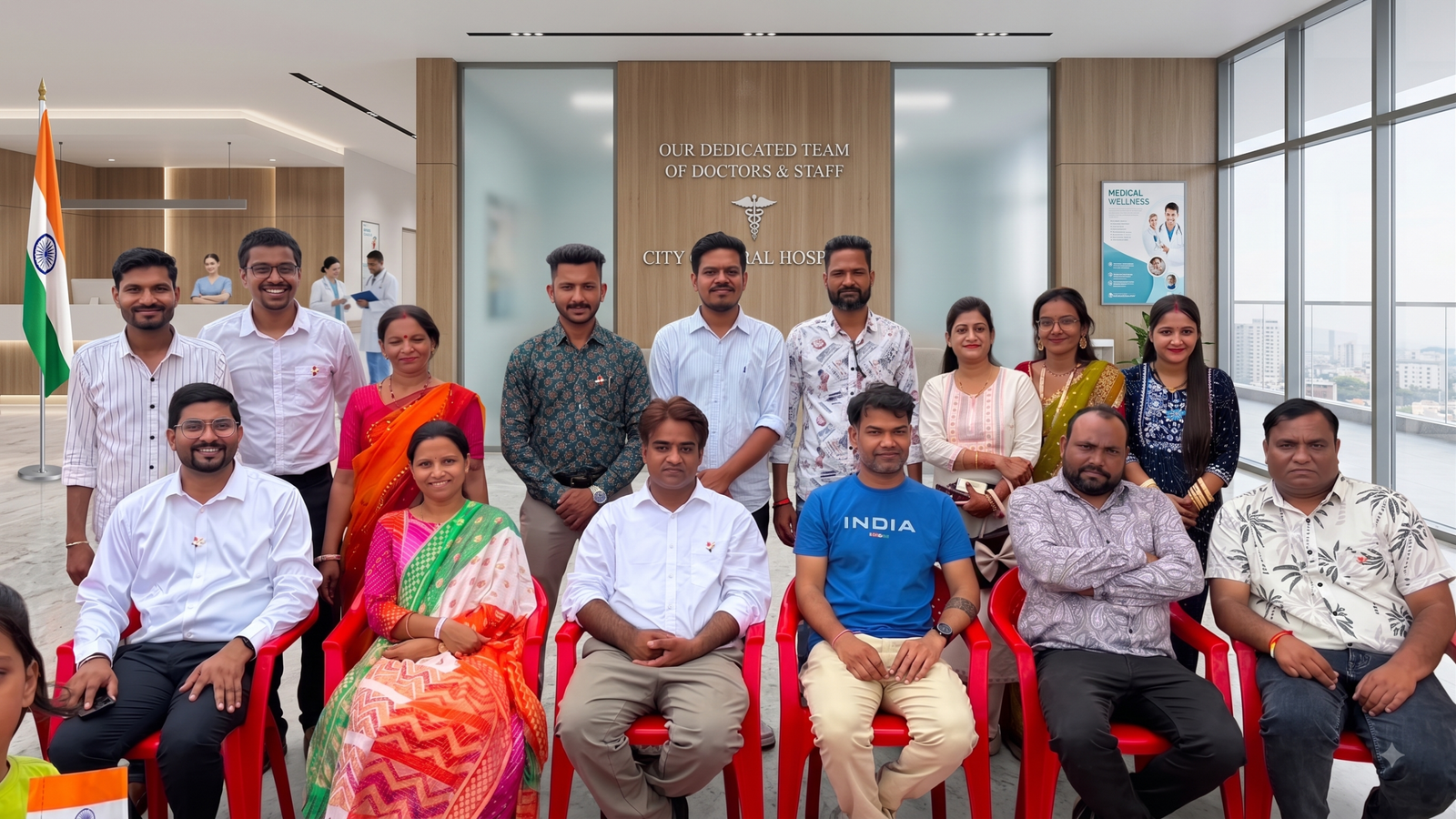
305+ Verified Patient Reviews
“Dr. Akash sir ka treatment bahut effective raha hai. Unki dedication aur understanding ki wajah se main apni life mein bahut improvement dekh paya. Truly one of the best doctors in Kota.”
“Very friendly and affordable. Dr. Parihar explains everything so patiently, never feels rushed. The advice and treatment quality is genuinely top-notch.”
“My daughter was treated for severe depression and anxiety. I appreciated Dr. Akash’s treatment — we found a lot of changes and improvement. He is like a blessing for us. I will surely recommend him.”
Questions People Ask at 2 AM
रात 2 बजे पूछे जाने वाले सवाल
Scientific Foundation — Our Evidence Base
वैज्ञानिक आधार
More Services at Asha Multi-Speciality Hospital
Depression Treatment in Kota — Evidence-Based Care That Works.
Whether you are a student under impossible pressure, a homemaker carrying invisible weight, or someone who has been struggling in silence for years — Asha Multi-Speciality Hospital is here. ₹500. Confidential. Evidence-based. Human.
Find Us
Kota, Rajasthan — 324005